Dynamics on every knob
Give BOOST and ATTEN a range and they turn by themselves as the band rises past the threshold — or falls under it — fully 12 dB past it, with a 3 dB soft knee.


 New
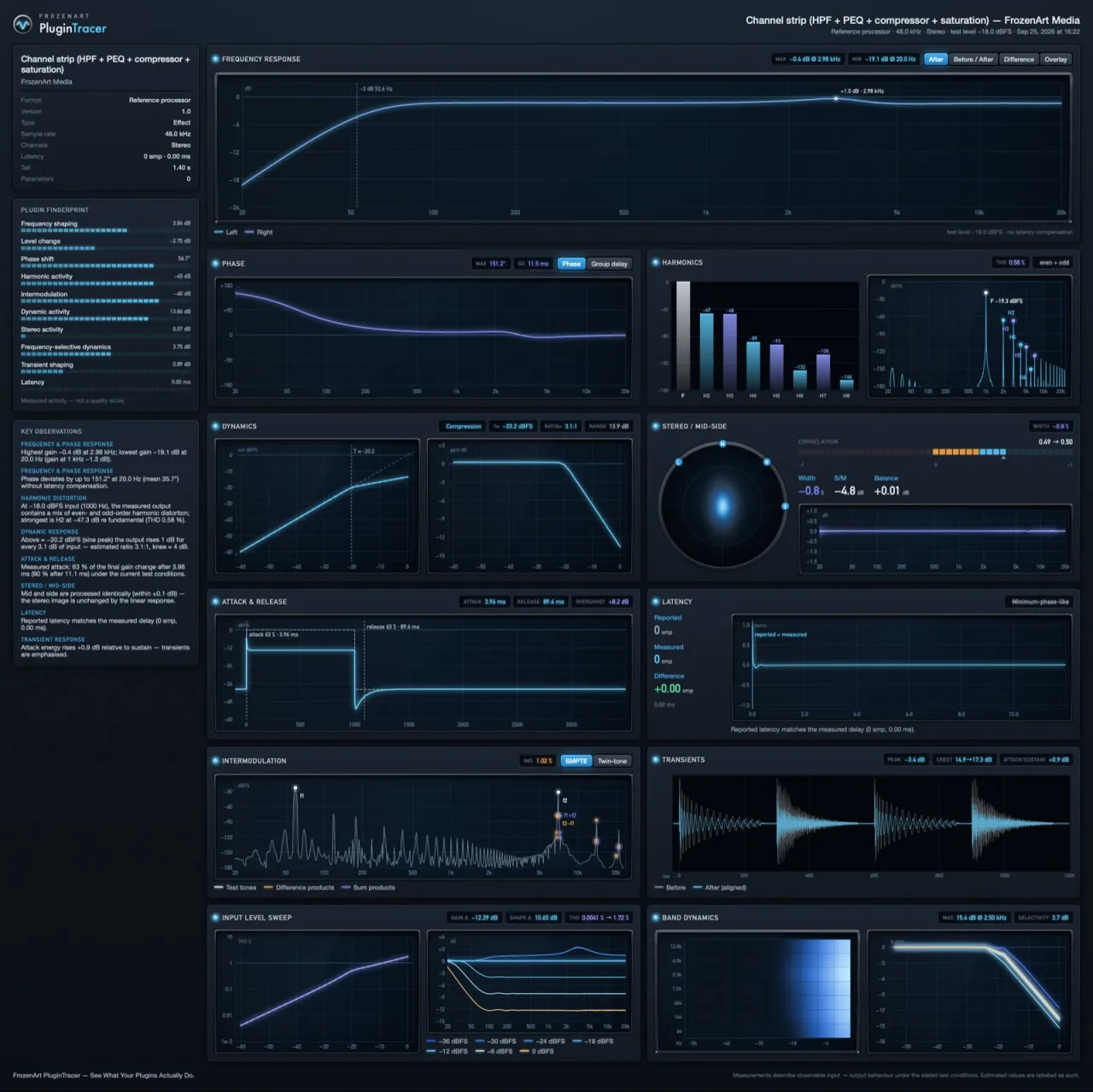
PluginTracer
See what your plugins actually do.
New
PluginTracer
See what your plugins actually do.
 Coming soon
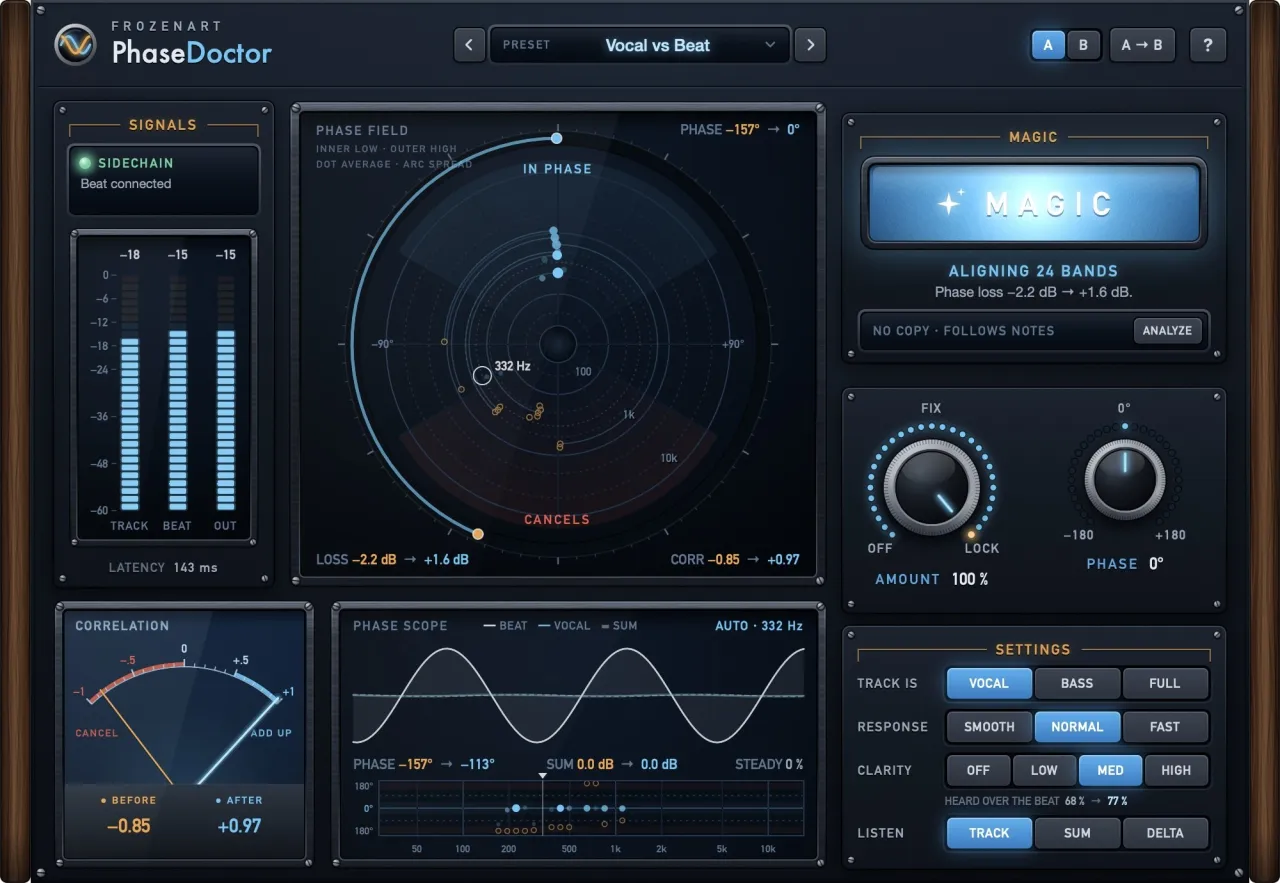
PhaseDoctor
Keeps your tracks in phase with the beat.
Coming soon
PhaseDoctor
Keeps your tracks in phase with the beat.
 Coming soon
Dynamic EQ
+ Tube saturator and exciter
Coming soon
Dynamic EQ
+ Tube saturator and exciter
FrozenArt Access
Sign in once. Start trials, redeem serials, install and update every FrozenArt product, and move licences between your Macs — without an installer in sight.
FrozenArt · Equalizer Coming soon
+ Tube saturator and exciter
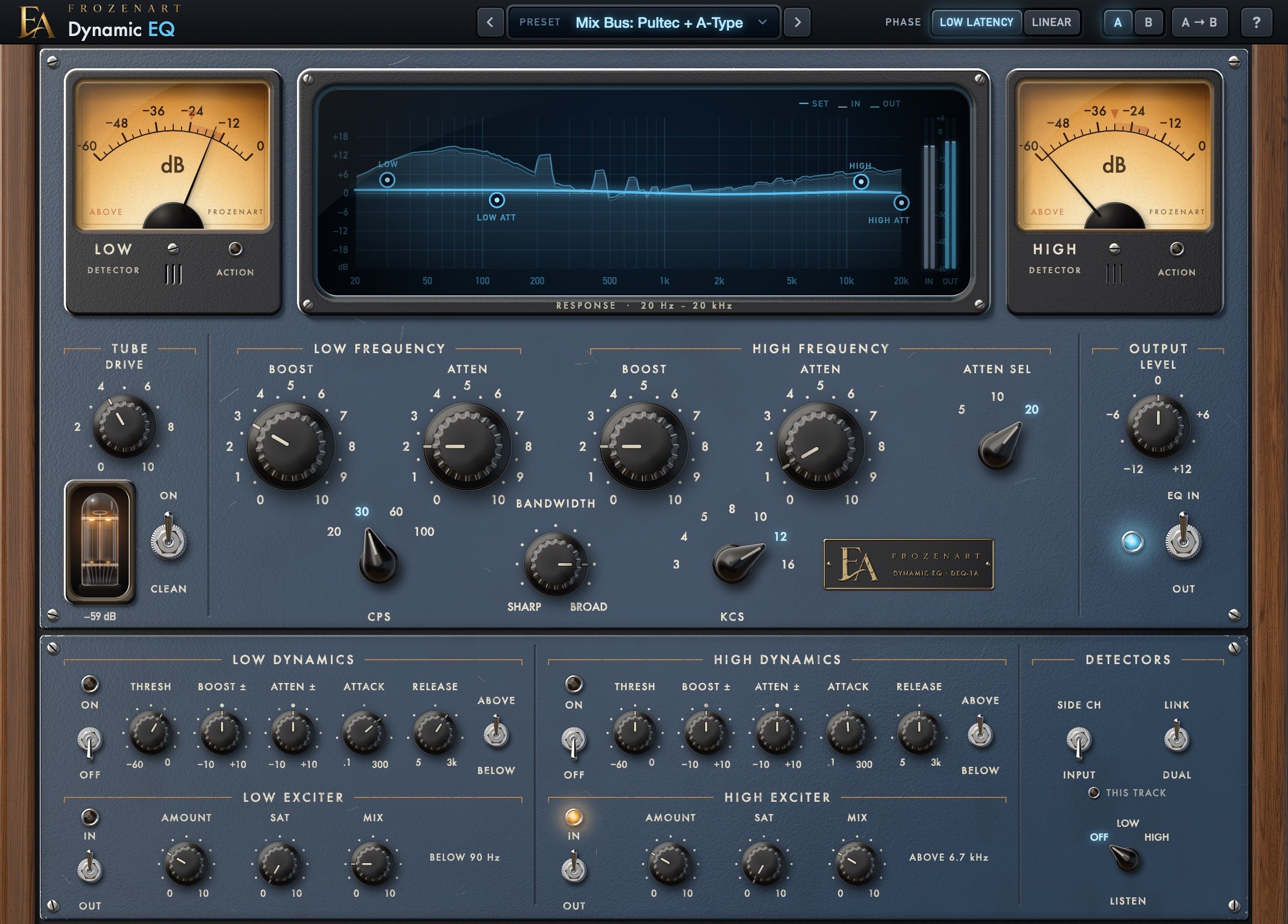
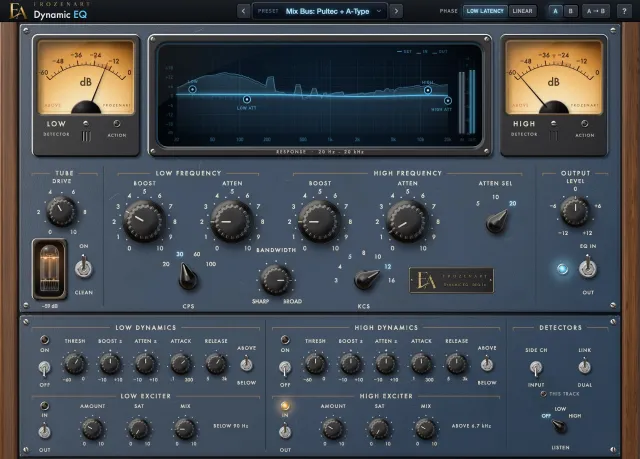
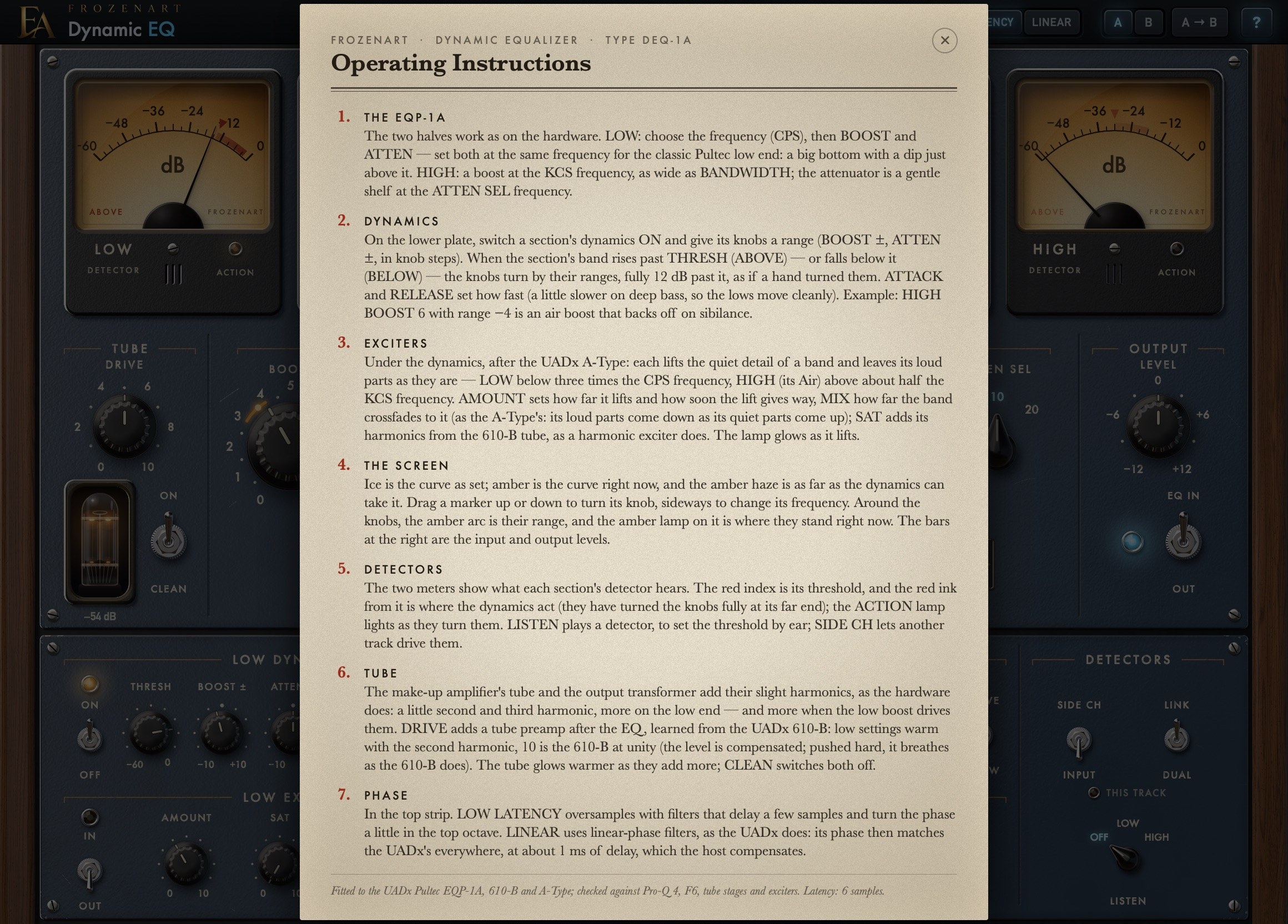
LOW FREQUENCY: choose the frequency, then BOOST and ATTEN — both at once give the classic low end, a big bottom with a dip just above it. HIGH FREQUENCY: a boost as wide as BANDWIDTH, and a gentle shelf cut. The knobs read 0 to 10, as on the hardware.
Then let a section follow the music. Switch its DYNAMICS on and give its knobs a range: when the band rises past the threshold they turn by that range, as fast as ATTACK, and come back as fast as RELEASE — like a hand on the knobs. An air boost that backs off on sibilance; a kick that stays tight because its loudest hits get less bottom.
The two halves work as on the hardware. Then each can move by itself with the music, a tube can warm it, and two exciters can lift what is quiet.
Give BOOST and ATTEN a range and they turn by themselves as the band rises past the threshold — or falls under it — fully 12 dB past it, with a 3 dB soft knee.
Let another track drive the dynamics: choose the kick in Logic’s Side Chain menu, and a bass’s low boost steps aside on every kick.
A tube preamp after the EQ, learned from the UADx 610-B: low settings warm with the second harmonic, 10 is the 610-B at unity. The level is compensated.
Learned from the UADx A-Type: they lift a band’s quiet detail — breaths, consonant tails — and bring its loud parts down a little. SAT adds harmonics from the 610-B’s tube.
LOW LATENCY costs 5–6 samples. LINEAR matches the UADx’s phase within 0.1°, at about 1 ms, which Logic compensates.
Watch it work
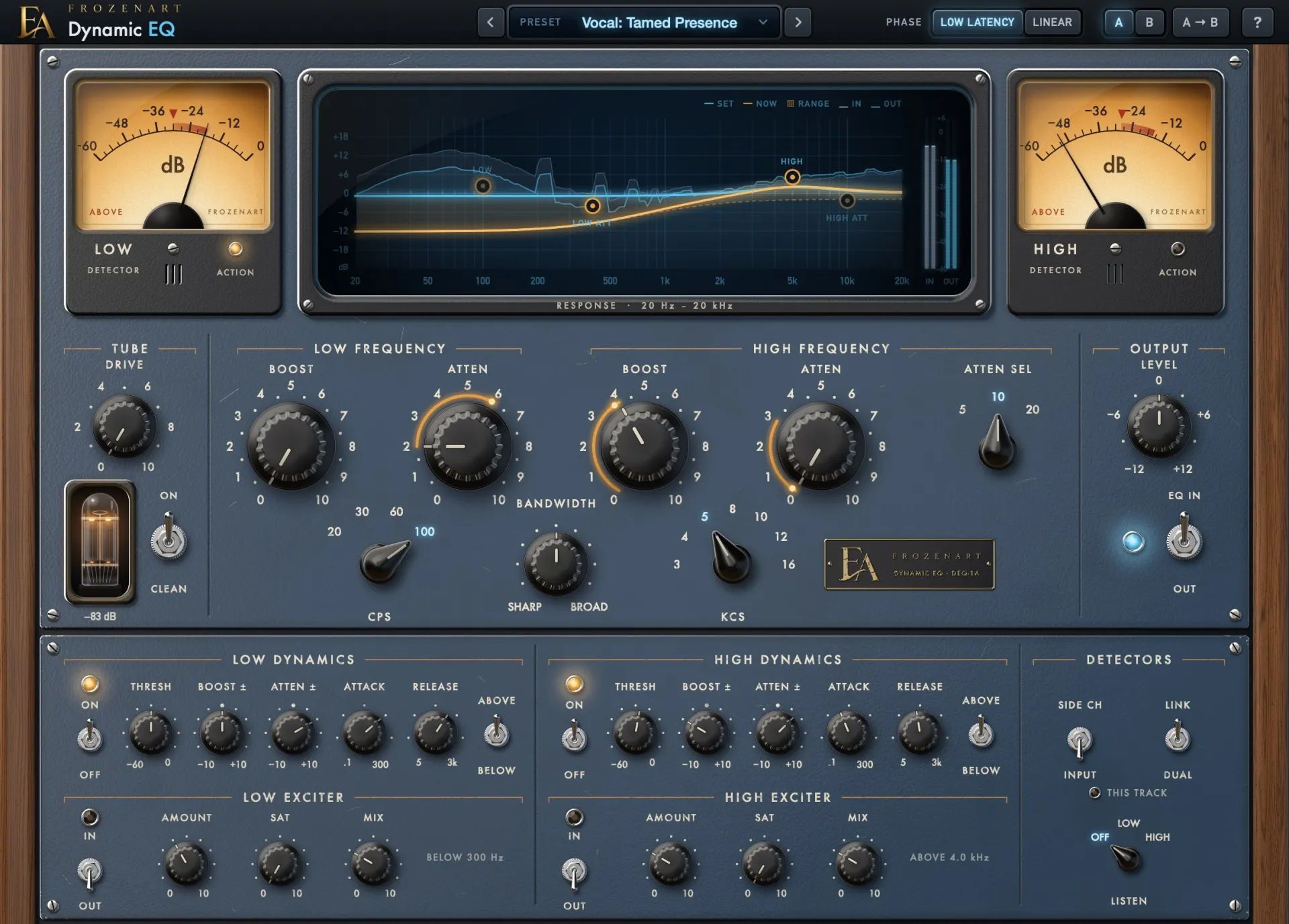
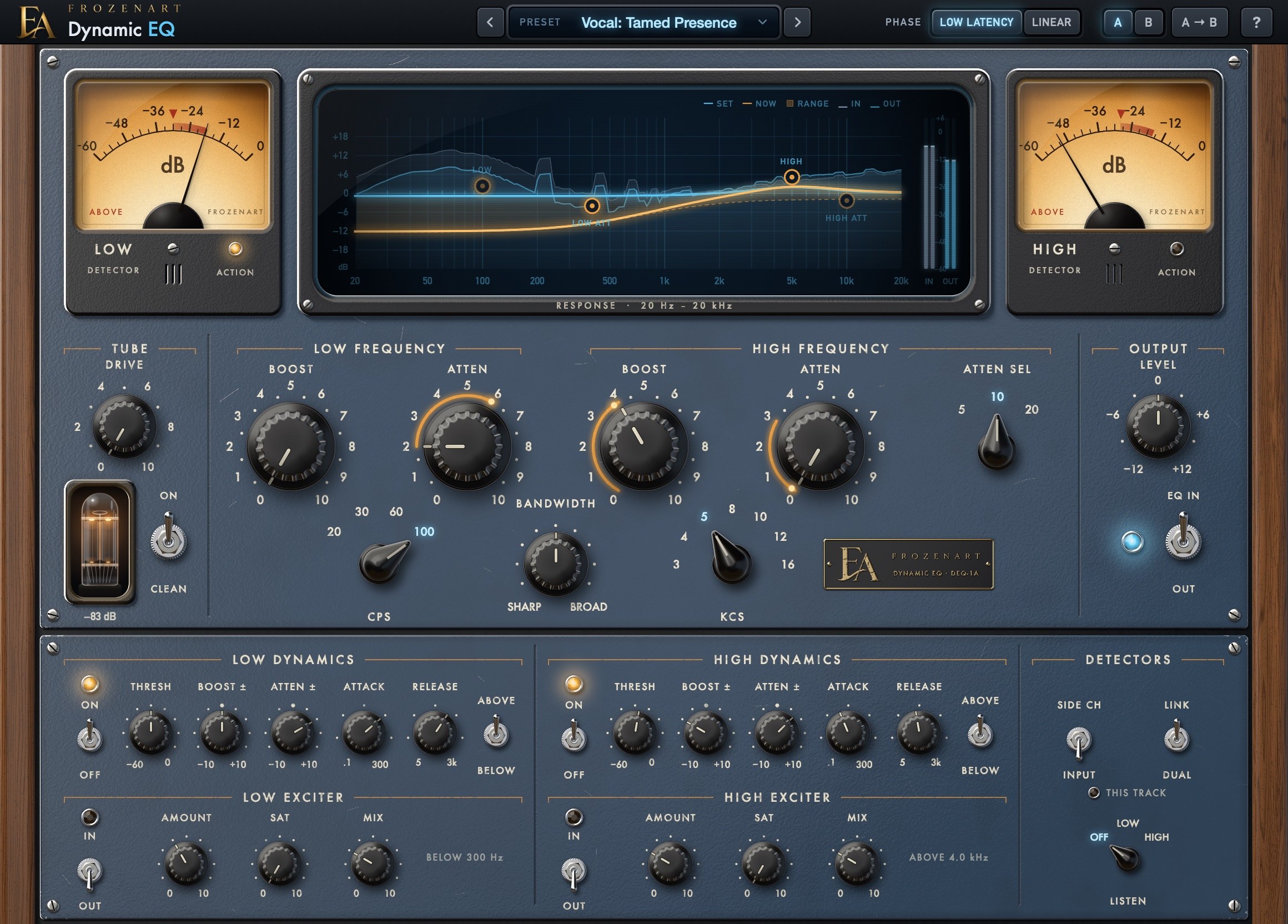
The screen shows the curve as set in ice, the curve right now in amber, and a haze for how far the dynamics can take it. Around each knob, the amber arc is its range and the lamp on it is where the knob stands right now.
The two needle meters show what each section hears, its threshold (the red index — drag it along the scale) and where the dynamics act. Drag a marker on the screen up or down to turn its knob, sideways to change its frequency.
Measured the same way, the curves differ by 0.01–0.07 dB RMS and the harmonics by about 1 dB. A few things differ on purpose: the output knob is in dB with no OFF, and the UADx’s faint harmonic floor and grit are not copied.
It is an Audio Unit (AUv3), so it runs in Logic Pro and in hosts that load AUv3 effects. There is no VST3 version yet.
It turns the knobs when the band falls under the threshold instead of rising past it — for example more air on a master only while it is quiet.
Pultec, EQP-1A, UADx, 610-B, A-Type, FabFilter, Pro-Q and Waves are trademarks of their owners. They are named only to say what this plug-in was measured against; FrozenArt is not affiliated with or endorsed by them.